
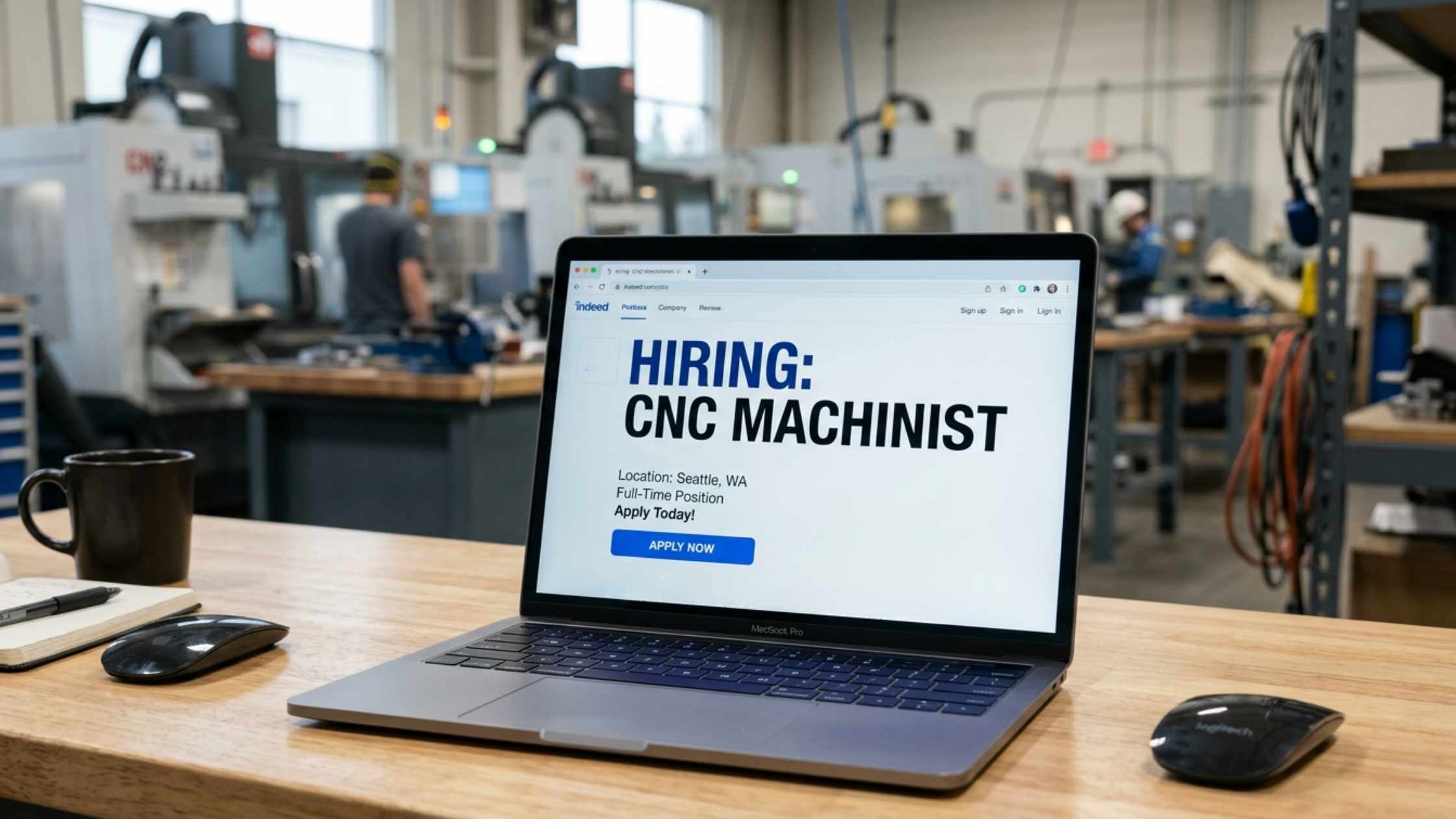
The machinists worth hiring aren't browsing job boards. Here's what actually moves a skilled CNC operator to say yes, and the framework that fills openings in 30-45 days instead of 72-90.
You posted the opening three weeks ago. Nothing. You reposted it. Still nothing. So you’re back where you started, running the same cycle while your machines need operators and your lead guy is covering gaps that shouldn’t be his problem.
Here’s what most shop managers don’t realize: the posting isn’t broken. The process is. You’re reaching one slice of the market, the small group actively job hunting right now. The machinists worth hiring, the ones with real experience and the ability to hold tolerances and solve problems on the fly, most of them aren’t browsing job boards. They’re settled in somewhere, or casually open, or they’d move for the right opportunity if the right conversation found them. Your posting never reaches any of those groups.
This week, we’re mapping why that cycle keeps repeating, what actually moves a skilled machinist to say yes, and how a hiring process built around how tradespeople actually make decisions produces faster placements and longer retention. The manufacturers filling roles in 30 to 45 days aren’t doing anything magical. They’re reaching candidates differently, moving decisively, and setting retention up at the offer stage instead of hoping it happens by accident.
How many times have you posted the same opening, waited weeks, and started over?
You’re running a real shop with real machines, steady work, and an environment where a skilled machinist can actually build something. That offer is worth more than it gets credit for in a hiring process built around posting and waiting.
The machinists you want to hire are out there, some actively looking, some quietly open, some settled into a role they’d leave if the right conversation found them. This comes down to reach.
Standard job postings reach one of those three groups. The other two never see the opening.
According to the National Association of Manufacturers, 25.74% of manufacturers reported vacancy rates of 5% or higher heading into late 2025. Most of those shops are running the same posting cycle. That’s the opening, not in the labor market, but in the hiring process itself. A shop that reaches candidates differently doesn’t need more applicants. It needs fewer competitors for the ones already out there.
A hiring process built around how skilled tradespeople actually make decisions produces faster placements and longer retention.
This post breaks down what that process looks like: how to reach the full range of available candidates, what actually moves a skilled machinist to say yes, and how to set a hire up to stay once they’re through the door. If your openings have been sitting longer than they should, there’s a practical path forward, and it starts with rethinking where the hiring process is spending its time.
What the Market Is Telling You and How to Use It
Filling a CNC machinist role takes time. According to data from HR Dive and Employ, the average manufacturing position runs about 72.6 days to fill, and for skilled trades roles like CNC machinists, that window regularly stretches to 90 days or longer. That timeline reflects the depth of experience these roles actually require, and it’s worth planning around rather than being surprised by.
The supply side has a structural explanation. Carolyn Lee, President of The Manufacturing Institute, put it directly: “The hardest skills to find are the ones that maintain and fix equipment. Every company we speak with is trying to hire technicians, every single one. The challenge is that there is no one walking around on the street with these skills, and it takes one to two years to teach those skills and another one to two years to contextualize those skills to the specific plant environment.”
That’s the reality of what you’re hiring for. A machinist who can hold tight tolerances on a Haas or Mazak, troubleshoot mid-run, and adapt to your specific fixturing and programs didn’t get there fast. That depth is exactly what you’re paying for, and it’s what makes a well-matched hire worth pursuing the right way.
Closing the 90-day gap starts with defining the role properly. Specific machines, real tolerances, honest description of the environment. That level of detail attracts stronger talent and speeds up every step that follows, with everyone aligned to a clear target from day one.
What Skilled Machinists Actually Respond To
Most hiring processes only reach candidates actively searching. The larger pool is everyone else: people casually open to the right move, or experienced operators who’d consider a change if the fit was compelling enough. Reaching all three groups and giving each one a reason to engage is where the real leverage sits.
What consistently moves all three is specifics. A machinist, active or not, looks for a few things before engaging:
- What machines are running? Make, model, control type. Fanuc or Siemens, Haas or Mazak, that tells them immediately whether the role fits their background.
- What kind of work? Tolerances, materials, job shop versus long-run production. These details tell a skilled candidate whether they’ll actually be challenged.
- What does the team look like? Experienced machinists want to work alongside other skilled people. The crew matters to them.
- Where can this go? A path toward programming, a lead role, exposure to new equipment, strong talent treats these as real decision factors.
A posting or outreach message that answers those questions directly will pull responses from candidates a generic listing never touches. It also filters naturally. Fewer total applicants, and a much higher percentage of people genuinely worth talking to.
A Hiring Framework That Fills Roles and Keeps Them Filled
1. Profile the role in shop-floor terms
Before any outreach goes out, get specific. What machines? What tolerances? What does the first 30 days need to look like? The sharper that profile, the faster every downstream step moves: sourcing, screening, presenting. Vague profiles produce vague results.
2. Evaluate fit in both directions
A resume shows where someone has been. A real evaluation surfaces what they want next and how they work. A machinist with 10 years of experience who’s ready to move into programming is a strong candidate for the right shop, and a retention risk for one that needs a reliable operator and nothing more. Getting that read before the offer saves everyone significant time.
Research from Deloitte found that workers who feel they can develop needed skills at their current employer are 2.7x less likely to leave. When candidates can see a real development path such as new equipment, advancement, expanded scope, that becomes part of why they choose you and part of why they stay.
3. Reach beyond the active job seeker pool
Experienced machinists who aren’t actively searching still move for the right opportunity. They just need to hear about it through the right channel.
Tap your current team. Your best machinists know other good machinists. A referral program with a real incentive attached turns your shop floor into an active sourcing network. Strong people tend to know other strong people.
Stay visible in the trades community. Local machining associations, vocational programs, and community college partnerships put your shop in front of candidates before they’re looking. That familiarity matters when they do start.
Work with a recruiter who already has relationships in the trades. A recruiter like Cannonball Recruiting who’s spent years placing CNC machinists has direct lines to people who’d never respond to a cold posting, people who trust the source, know their work is understood, and will take a call when something genuinely relevant comes up. That network takes years to build and can’t be replicated quickly on your own.
The common thread: connection before the search. When a machinist already knows your shop’s name or hears about an opening from someone they trust, the conversation starts from a completely different place.
4. Move decisively once you have the right candidate
Strong machinists are evaluating multiple opportunities at once. A hiring process that drags through uncoordinated rounds or stalls at scheduling loses candidates who were genuinely interested. Speed at the decision stage signals professionalism and respect, and that impression carries into the first week on the floor.
5. Set retention up at the offer stage
What gets communicated during the hiring process about the environment, the equipment, the team, and the growth path directly shapes how long the hire stays. When what a candidate was told matches what they experience on day one, they settle in. That alignment is practical and achievable. It just requires an honest conversation before the offer goes out.
The sequence: Profile clearly → Evaluate fit in both directions → Reach the full candidate pool → Move decisively → Retain through honest alignment.
The opportunity in front of you
Filling a CNC machinist role in 30-45 days is achievable. It’s happening in shops that treat the hiring process with the same precision they apply to the work itself. A clear role profile, honest communication about what makes the shop worth joining, and the right sourcing channels work together to compress that timeline and strengthen retention at the same time.
When the process matches the quality of the opportunity, the right talent has a real reason to say yes and a real reason to stay.
Ready to build a process that works?
If you have a CNC machinist opening that’s been open longer than it should be, let’s talk about what’s slowing it down and what a better path forward looks like.
Cannonball Recruiting works exclusively with manufacturing and machining shops. We place skilled tradespeople who fit the work, the equipment, and the team, and we move quickly without cutting corners on fit.
Know a shop manager who’d find this useful? Pass it along.
Frequently Asked Questions
Why doesn't posting and waiting work for CNC machinist openings?
The machinists worth hiring aren't spending their time browsing job boards. They're already employed and not actively looking, which means a posted listing only reaches people who are already searching, not the strongest available candidates.
What actually moves a skilled CNC operator to consider a new role?
Direct outreach that speaks to their specific experience and shows a real understanding of the equipment and work involved, not a generic job posting competing with hundreds of others in a feed they may never see.
How much faster can openings fill with a different approach?
The framework outlined fills openings in roughly 30 to 45 days instead of the 72 to 90 days a post-and-wait cycle typically takes, because it targets people directly instead of waiting for them to apply.