
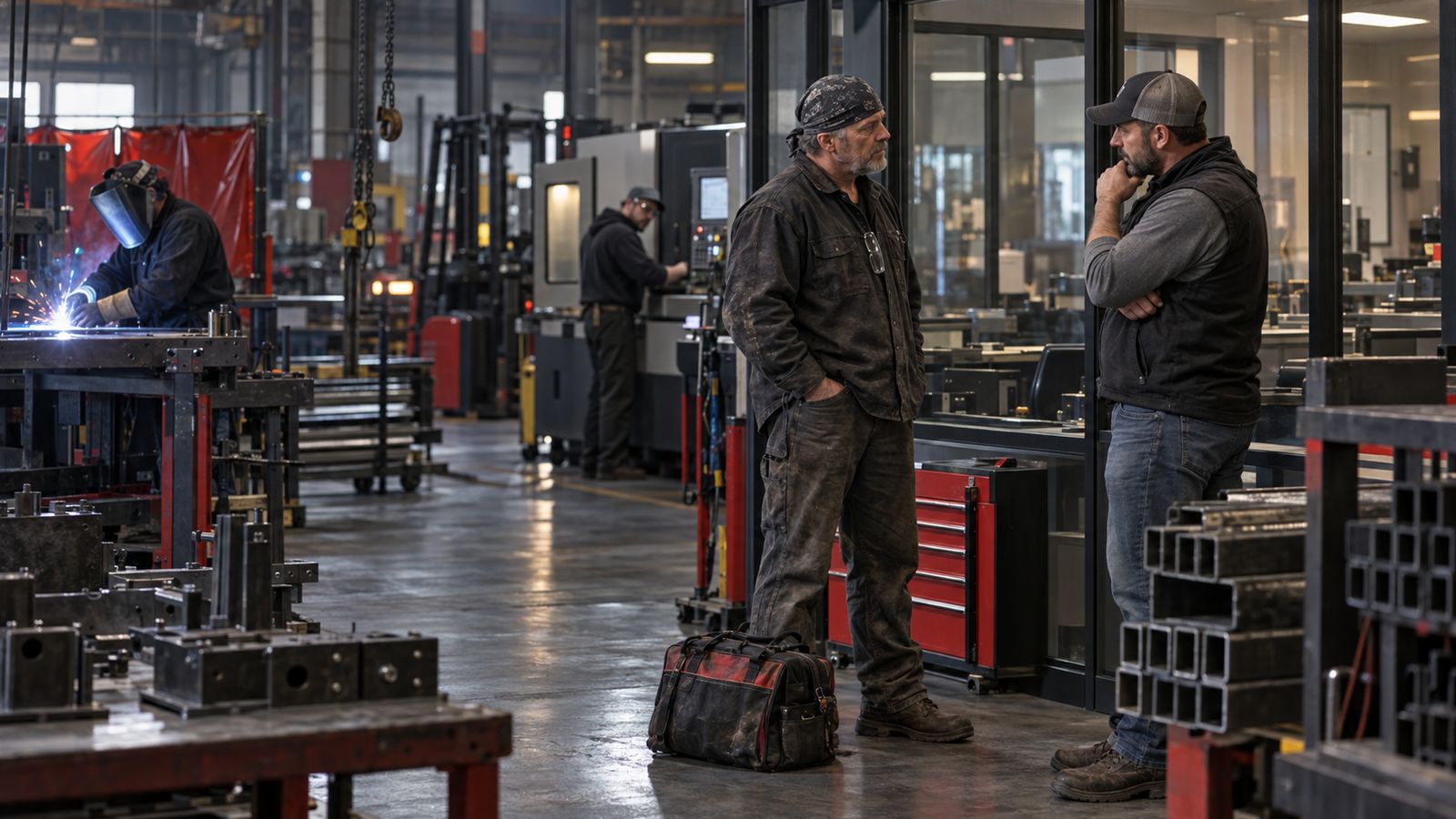
A counteroffer can keep an experienced welder or machinist, but it also resets how your whole shop thinks about pay. Find out why the employee is leaving, whether it can be fixed, and how to review pay before resignations force it.
Counteroffers can either keep your experienced welder, machinist, fitter, or maintenance technician in your shop, or change how the rest of your crew thinks about pay… nothing in between.
When a good talent hands in their notice, matching the offer can feel like quite the quickest way to keep production covered. You think replacing them could mean weeks of recruiting, more overtime for the crew, and supervisors figuring out who can pick up the work in the meantime.
While a raise may keep that person around, people on the floor will probably hear about it. Now the employee knows there was more money available, and coworkers may start wondering whether they need an outside offer to have the same conversation.
Well, a counteroffer can still make sense. The decision gets much easier when you know what pushed the employee to listen in the first place, whether the issue can actually be fixed, and what the offer will mean for the rest of your shop.
Why One Counteroffer Can Change the Pay Conversation Across the Shop
If someone gets another $2 an hour only after handing in their notice, they’re going to wonder why that money wasn’t on the table before.
Welders know what other welders are making. Machinists hear what nearby shops are paying. Former coworkers call each other when another employer adds a shift or needs someone who can set up a certain machine.
So even though the counteroffer involves one employee, the conversation does not stay there. Three things can happen quickly.
1. The counteroffer creates a new pay reference point
Suppose an experienced welder gets bumped from $27 to $29 an hour after receiving another offer. People doing similar work may start comparing that new rate with their own.
That comparison becomes especially sensitive when another employee has:
-
More years with the company
-
Additional welding certifications
-
Broader fit-up experience
-
Lead responsibilities
-
More difficult code work
-
Greater flexibility across jobs or shifts
A company may have a perfectly reasonable explanation for the difference, either way, employees still notice it.
The same issue can show up in machining. A CNC machinist handling setups, program edits, troubleshooting, and first-piece inspection may take a hard look at their own pay when someone with a narrower role receives a large counteroffer.
That is why a counteroffer can turn into a compensation discussion across several positions.
2. Employees see what finally triggered a pay review
If regular conversations about pay move slowly, an outside offer can start looking like the fastest route to a serious discussion.
Nobody has to threaten the company or deliberately shop for leverage. People can simply observe what happened.
One employee raises compensation concerns and gets little movement. Another brings in an offer from a competitor and receives an immediate increase. The difference is easy to spot.
That can create a pattern you never intended:
-
Someone thinks their pay is falling behind
-
A recruiter calls or a former coworker mentions an opening
-
They interview and receive an offer
-
The current company responds with more money
-
Word gets around the shop
-
Another employee starts wondering whether they need an outside offer too
Replacing someone who already knows your equipment, standards, customers, and production expectations takes time, and that makes keeping them exactly appealing.
Still, the short-term relief deserves a broader pay check across the floor.
3. One resignation can expose a wider compensation issue
Sometimes the outside offer tells you the employee really has fallen behind.
Their responsibilities may have changed considerably since their last pay review. A machinist may have started as an operator and gradually taken on setups, tooling, offsets, edits, and troubleshooting. A welder may now hold additional qualifications or handle more demanding work. A maintenance technician may have become the person everyone calls when electrical, hydraulic, or PLC problems show up.
In those cases, the resignation has surfaced something that deserves attention.
Looking at comparable people at the same time can save another difficult conversation later. If several employees have taken on broader work without their pay keeping pace, fixing one rate leaves everyone else in the same position.
Why the Outside Offer May Only Tell You Part of the Story
The number on the competing offer is easy to focus on because you can compare it immediately.
Someone makes $28 here, another shop offers $30. Matching $30 appears to solve the issue. Sometimes it does; other times, that extra $2 simply made the new job easier to say yes to.
Gallup’s May 2026 tracking found that 52% of U.S. employees were either actively looking for another job or watching for opportunities. That means plenty of employees are willing to hear what another company has to say even before they have decided to leave.
For skilled tradespeople, several factors can make that conversation attractive.
Shift: A machinist may have spent years waiting for the first shift. If another shop can offer days immediately, matching the hourly rate leaves the biggest reason for moving untouched.
Overtime: Extra hours can be attractive when someone wants them. Mandatory Saturdays and constant overtime land differently, especially when the same experienced employees keep covering open positions.
A bigger hourly rate may lose some appeal when it comes with the same schedule that pushed the employee to answer another recruiter’s call.
Type of work: The job itself can become a reason to leave. A machinist who wants more setup and programming experience may have little interest in spending another two years loading established jobs. A welder who wants structural or code work may start looking elsewhere after years of repetitive production welding.
More money can keep someone around temporarily. The work waiting for them Monday morning remains the same.
Career progression: Skilled trades careers do not always follow neat ladders.
A strong fitter may become the person newer employees rely on without ever receiving a formal lead role. A machinist may gradually pick up programming responsibility without seeing a clear next step. A maintenance technician may become the shop’s first call for difficult problems while remaining in the same position they held years earlier.
Another employer can become attractive because it offers room to learn, lead, or take on different work.
Commute and schedule outside work: A shorter commute can give someone several hours back every week. A different start time may make family schedules easier. Those tradeoffs become significant even when the pay difference is small.
This is where the resignation conversation needs to get specific. One question can tell you a lot: If the other company offered exactly what you already make here, would you still want to leave?
If the answer is yes, matching the competing rate probably leaves another issue unresolved.
How Steel and Metal Fabrication Shops Can Respond Without Making Counteroffers the Normal Pay Process
Once you know why someone wants to leave, you can make a better call on the counteroffer.
There is no rule saying every counteroffer is a mistake, however, there is also little value in paying more to preserve a situation the employee already wants to leave. Few of these distinctions help.
1. Separate a pay correction from a retention bid
If someone is underpaid for the work they already perform, treat that seriously.
Look at what the role has become:
-
Have they earned additional certifications?
-
Are they setting up machines they previously only operated?
-
Have they taken on programming or inspection?
-
Are they troubleshooting equipment other employees cannot?
-
Have they started training newer employees?
-
Are they effectively leading part of the floor?
-
Have local rates for the same skills moved considerably?
Those changes give you a stronger basis for reviewing compensation than the offer letter alone. They also give you a reason to look sideways at comparable employees. A legitimate pay correction may apply to several people.
2. Decide whether the reason for leaving can actually be addressed
Some reasons have practical answers.
A first-shift opening may change the decision for someone tired of nights. Training may give an operator a path toward setup work. A compensation adjustment may correct a rate that has fallen behind. Different responsibilities may keep someone who has outgrown their current work interested.
Other situations point toward a departure.
Someone relocating, changing careers, leaving the trade, or pursuing work your shop does not offer may already have made the decision. Increasing the hourly rate can delay that departure without changing where they want to go.
Knowing which situation you are dealing with keeps the conversation grounded.
3. Review skilled-trades pay before another employer does it for you
Resignation day is a rough time to discover that someone’s responsibilities changed two years ago.
Pay reviews can connect naturally to changes already happening on the floor. For example:
-
A new certification
-
Additional machine capability
-
Setup or programming responsibilities
-
Inspection duties
-
Training responsibilities
-
Lead responsibilities
-
Greater troubleshooting capability
That gives employees a clearer connection between what they can do and how their pay develops. It also reduces the chance that an outside company becomes the first one to put a new dollar figure on skills your employee has been building inside your shop.
4. Keep recruiting relationships active before somebody gives notice
Counteroffers become much harder to evaluate when one resignation leaves you feeling like you have no alternative.
That is especially true when the employee holds a scarce certification, knows a difficult machine, or carries knowledge that only one or two people on the floor have.
A deeper recruiting bench gives you room to think. That can include:
-
Former employees who left on good terms
-
Previous finalists from earlier searches
-
Skilled tradespeople you have spoken with before
-
Referrals from current employees
-
Local talent with related equipment experience
-
A recruiting partner that already understands your operation
You may still decide to make the counteroffer, the difference is that you are making that choice because keeping the person makes sense rather than because production leaves you feeling cornered.
Counteroffers can keep a good employee on the floor, but they can also affect how the rest of the shop thinks about pay and staying put. Knowing why someone wanted to leave gives you a better read on whether the answer is more money, a change to the job, or letting them go.
Are counteroffers becoming the default way to keep experienced tradespeople on your floor?
Cannonball Recruiting works with steel and metal fabrication shops that need stronger pipelines for welders, machinists, maintenance technicians, and other skilled trades.
Talk to us about the roles that put the most pressure on your operation when they open.
Frequently Asked Questions
Should I make a counteroffer when a skilled tradesperson resigns?
It can make sense, but first learn what pushed them to listen. Ask: if the other company offered exactly what you make here, would you still want to leave? If the answer is yes, matching the rate probably leaves the real issue unresolved.
How does one counteroffer affect the rest of my shop?
Coworkers usually hear about it. A bump from $27 to $29 an hour becomes a new pay reference point, and employees may start thinking an outside offer is the fastest way to get a pay review. It can also expose others whose pay hasn't kept up with their work.
How can metal fabrication shops avoid relying on counteroffers?
Tie pay reviews to changes on the floor, like new certifications, setup or programming duties, inspection, training, or lead work. Keep a recruiting bench of former employees, past finalists, referrals, and a recruiting partner so one resignation doesn't leave you cornered.