
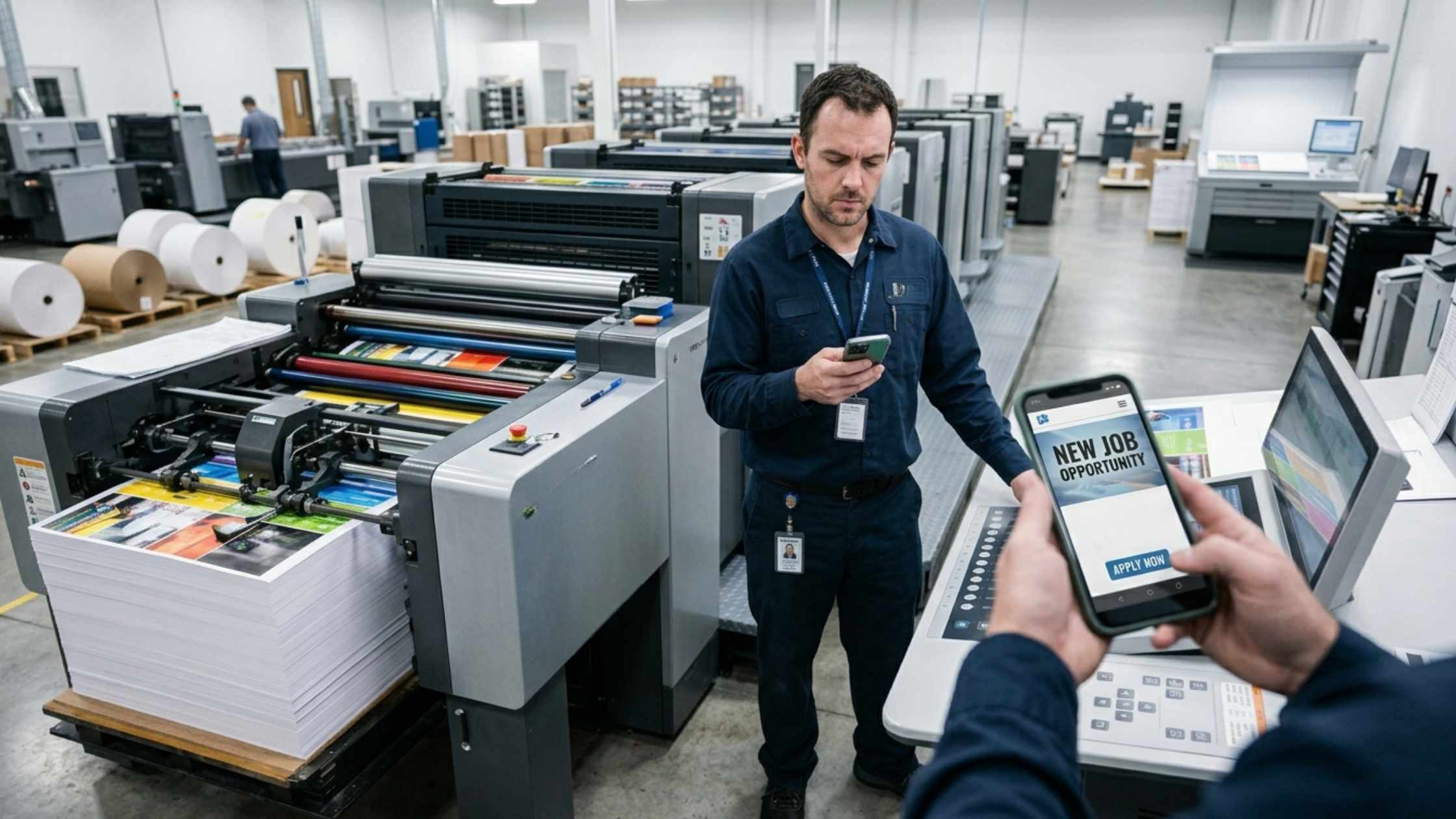
Press operator retention has quietly become one of the most urgent operational problems in printing and packaging manufacturing, and most plant managers don't see it coming until the two-week notice lands on their desk. Here's what to watch for and what actually works.
The press operator who has run your flexographic line for seven years without a quality escape is being recruited right now, and they’re listening.
That’s the reality of this market in 2026. Press operator retention has quietly become one of the most urgent operational problems in printing and packaging manufacturing, and most plant managers and HR teams don’t see it coming until the two-week notice lands on their desk.
This post breaks down what’s actually happening in the talent market, what your experienced operators are weighing when they pick up a recruiter’s call, and what retention moves actually work for this specific workforce.
The Talent Market in Printing and Packaging Right Now
The talent pool for experienced press operators, flexographic, web offset, digital, has been thinning for over a decade. Vocational pipelines dried up. Apprenticeship programs specific to printing and plastics equipment were never rebuilt at scale. What’s left is a shrinking group of experienced operators who know it.
Recent industry data puts actual numbers to it. PMMI’s Inside the Workforce Gap report, which covers packaging and processing operations directly, found:
- 72% of end-user companies report high turnover among line operators, the people doing essential daily production work
- 47% report the same among technicians
- 73% of OEMs identified high turnover or limited retention as a top customer pain point
The printing side tells the same story. PRINTING United Alliance’s 2025 industry research points to roughly 75% of printers struggling to hire skilled operators, a figure that has remained stubbornly persistent despite wage increases and expanded recruiting efforts.
What accelerated things recently is a combination of factors hitting at the same time. Post-pandemic wage recalibration raised expectations across the board. Competitors are posting above-market rates for the exact equipment your operators run. And staffing agencies, many of whom have no idea what a barrel temperature profile is or what color registration actually requires, are cold-calling your floor directly.
Three signals worth watching right now:
- Your operator updated their LinkedIn profile in the last 90 days. They’re actively positioning themselves for something.
- Competitors in your region are posting roles for their specific press equipment. If they’re advertising for an 8-color wide-web flexographic operator, they’re targeting someone already running one.
- Overtime requests are being declined more frequently. An operator close to leaving stops trading personal time for a company they’re already mentally moving on from.
How far along any of those conversations already are, that’s the part most managers don’t find out until the notice is on the desk.
What a Seven-Year Press Operator Is Actually Weighing
Experienced press operators don’t leave for $1.50 more an hour. That’s rarely the real reason, even when it’s the stated one. What actually moves them is a shift in how they feel about the work, the equipment, and the people managing them.
There are three things this workforce watches closely.
Recognition of specialized skills. A flexographic press operator who consistently holds tight color registration tolerances, manages ink viscosity across different substrates, and troubleshoots registration drift without shutting down the line knows exactly what they bring to the floor. When management treats that skill set as interchangeable with a general machine operator, the operator notices, and they remember.
Capital investment signals. Operators read the floor the same way you read a P&L. When aging equipment gets patched instead of replaced, when maintenance requests sit open for weeks, when a competitor down the road installs a new press, experienced operators see where the priorities are. They’d rather run current equipment for a company that invests in its floor than nurse outdated machinery through another year of workarounds.
Supervisory friction. Promoting an inexperienced shift lead over a veteran press operator is one of the fastest ways to lose both people. The veteran leaves feeling passed over. The new shift lead loses floor credibility before they’ve even started.
Deloitte and the Manufacturing Institute’s ongoing talent research puts it directly: companies that invest in developing their workforce through training, technology, and policies that actually meet what employees need are the ones positioned to retain them as the skills gap widens. The operators who stay long-term are the ones who feel like their growth is part of the plan, not an afterthought.
Here are three questions worth asking your best operator this week, framed as a check-in, not a formal retention meeting:
- What’s the one thing about your current setup that slows you down most?
- Is there equipment or training you’ve been wanting that hasn’t happened yet?
- What would make this the last job you ever need?
The answers will tell you more than any engagement survey.
A Practical Retention Framework for Press and Packaging Operations
Generic retention tactics like catered lunches and wellness stipends don’t land with this workforce. What works is respect expressed in operational terms. Here’s a framework built specifically for press operators, converting equipment specialists, and plastics manufacturing techs.
1. Benchmark compensation to the equipment, not just the job title
Pay rates need to reflect the machine they’re running. A flexographic press operator on an 8-color wide-web press with pharmaceutical packaging experience commands a different rate than someone running a 2-color narrow-web setup on corrugated. If your comp structure doesn’t make that distinction, a competitor’s offer letter will.
Audit your operator pay against what’s currently being offered in your region for the specific equipment on your floor. Do this annually, not reactively.
2. Build a visible skills ladder tied to processes
A clear progression path keeps experienced operators engaged and gives newer operators something to work toward. Structure it around process certifications, not just tenure:
Operator, to Lead Operator (color management, substrate changeovers), to Setup Tech (press setup, registration calibration, ink system maintenance), to Trainer or Process Lead (PLC basics, troubleshooting, onboarding new hires).
Operators who see a defined path and get rewarded for walking it tend to stay to finish it.
3. Treat maintenance as a partnership
When a press goes down, the operator who knows that machine best is your fastest path back to production. A culture that punishes downtime instead of investing in the operator’s diagnostic ability loses both the institutional knowledge and the person carrying it.
Pull your maintenance techs and press operators into the same conversation about recurring issues. Give operators the tools and authority to flag problems before they become unplanned stoppages. That involvement builds ownership, and ownership is a retention asset.
4. Run stay interviews, not just exit interviews
Exit interviews tell you why someone already left. Stay interviews tell you what to fix before they decide to. Run them at six-month intervals with your experienced operators. Ask the same core questions each time. Track what changes in the answers. When responses shift, especially around equipment frustration or supervisory friction, act within 30 days.
Pull your last three operator departures and look at the 90 days before each notice was given. In almost every case, the signal was already there.
The Operator Who Stays Is the One Who Feels Like It’s Worth It
Press operator retention comes down to one thing: experienced operators stay where they feel like their skill is understood, their development is supported, and the floor is worth investing their time in.
An experienced operator who knows your specific equipment, the quirks, the tolerances, the workarounds, represents six to twelve months of replacement time if they walk. That’s overtime, quality risk, scrap, and customer exposure while a new hire gets up to speed.
The operators keeping your line running and your quality clean aren’t going to send a warning shot. They’re going to give two weeks notice on a Tuesday and be on a competitor’s floor by the following Monday. The question is whether you’ve made staying the easier choice before that conversation ever starts.
If you’re managing an open press operator position right now or trying to prevent one, let’s talk. Cannonball Recruiting works exclusively in printing, packaging, and plastics. We’ve been doing this long enough to know the difference between a qualified candidate and someone who just looks good on paper. If you’re dealing with an open position or trying to get ahead of one, reach out.
Frequently Asked Questions
Why are experienced press operators at higher flight risk right now?
The talent pool for experienced press operators has been thinning for over a decade as vocational pipelines and apprenticeship programs failed to keep pace, and competitors and staffing agencies are actively targeting operators who already run the exact equipment they need.
What actually makes an experienced press operator consider leaving?
Rarely just a small pay bump. It's usually recognition of their specialized skills, whether the shop is investing in current equipment, and supervisory friction, like promoting an inexperienced shift lead over a veteran operator.
What retention moves work specifically for press and packaging operators?
Benchmarking compensation to the specific equipment they run rather than just their job title, building a visible skills ladder tied to real process certifications, and running stay interviews at regular intervals instead of only learning what went wrong after an exit interview.