
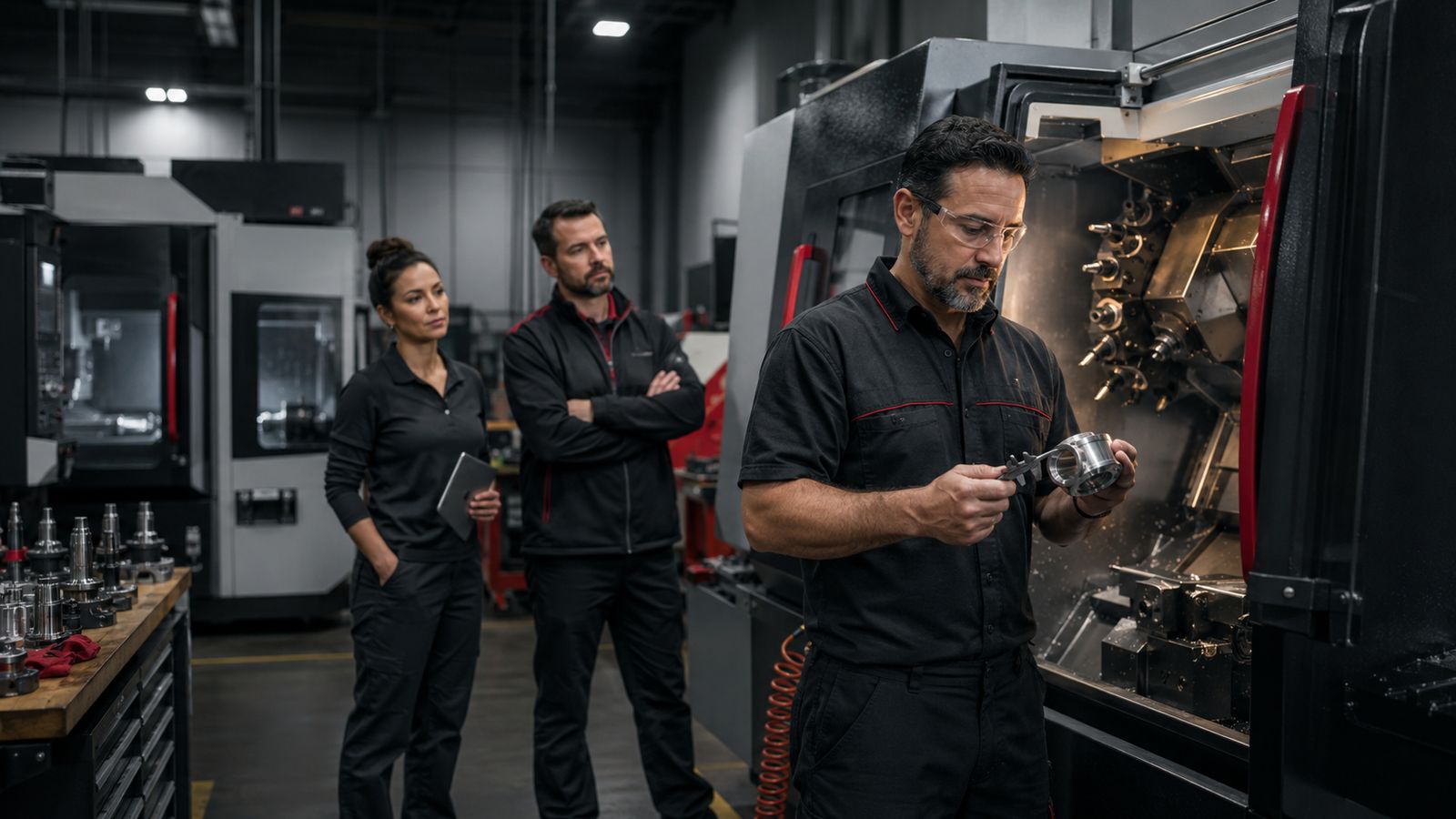
CNC machinist openings sit empty because a generic title hides big differences in equipment, controls, and scope. This article explains why the qualified pool is narrow and what helps a shop attract and keep experienced machinists beyond pay.
A CNC machinist opening looks like any other skilled trades listing on a job board. Same title, same general qualifications, same boilerplate about “attention to detail” and “ability to read blueprints.” That surface-level similarity is misleading, and it explains quite a lot about why these seats sit empty for months while other positions on the floor get filled.
Shops post the title, collect a stack of applications, and then spend weeks discovering that half the respondents have never touched the equipment sitting on their floor. The job title covers so much ground that it barely functions as a screening tool. It generates volume, and volume was never the actual problem.
Three things make CNC machinist openings different from nearly any other manufacturing hire: the equipment matters more than the title suggests, the role itself keeps expanding, and the machinists worth hiring already have options they’re weighing carefully. Each one narrows the qualified candidate pool in ways that no keyword search is going to catch.
”CNC Machinist” Covers More Ground Than the Title Suggests
Every shop runs different equipment with different control systems, which sounds obvious until you watch a hiring process ignore it completely. A machinist who has spent five years on one platform and one set of controls can be highly skilled and still need weeks of ramp-up time on a different setup. The knowledge transfers eventually. The productivity doesn’t transfer with it, at least not right away.
This is where the job title creates a false sense of interchangeability. Posting “CNC machinist” without specifying what’s actually on the floor is like advertising for a “driver” without mentioning whether the job requires a forklift, a semi, or a crane. Related skill sets from the outside. Meaningfully different jobs once you get there.
The machine type adds another layer. Running a standard vertical mill is a different hire than setting up a multi-axis turning center. The tolerances are different, the programming logic is different, and the troubleshooting is different. A candidate with ten years of strong experience on one type of equipment might need months to get fully productive on another. That’s time and output a shop can’t absorb when the seat has already been sitting open.
Even the line between operator, setup machinist, and programmer matters. Some shops need a person who can do all three, others need a skilled operator who can load programs someone else wrote and keep the machine running clean. Those are different people with different experience levels and different pay expectations. Lumping them under one title turns every application into a guessing game for both sides.
Zippia data shows that the average time-to-fill for CNC machinists in the U.S. falls between 36 and 42 days. Supply is part of it, yes, but a significant piece traces back to how the search itself is structured. When the job description stays vague, the funnel fills with candidates who look qualified on a resume but can’t step into the role and produce from day one. That cycle of post, screen, interview, reject, repost eats weeks every time it repeats.
That said, tighten the posting and call out specific control systems, machine types, and whether the role is production-focused, setup-heavy, or programming-inclusive. You’ll see fewer applications and significantly better ones. When your recruiter understands the equipment, they can screen for fit before a candidate ever walks onto the floor, and that’s where you shorten the search.
Today’s CNC Machinist Job Description Would Have Been Three Roles a Decade Ago
The role has changed faster than most shops have adjusted their expectations for who fills it. A machinist on the floor today is expected to read CAD/CAM files, handle multi-axis setups, manage SPC documentation, troubleshoot servo issues, and adjust programs mid-run to compensate for tool wear or material variation. Ten years ago, that scope was divided across an operator, a setup technician, and a programmer. Now it sits on one person.
That expansion makes every vacancy heavier. When a senior machinist leaves, the shop loses the accumulated knowledge of how that specific floor runs:
-
Which tooling works best for which jobs
-
What adjustments keep a particular machine in tolerance
-
Which shortcuts hold up under inspection
-
What to do when a material batch runs outside spec
That kind of institutional memory takes years to build.
The workforce demographics add context. Data USA’s latest figures show that machinists aged 50 to 64 now account for 38% of the active workforce. That’s the group carrying most of the full-scope experience that today’s job descriptions take for granted. As they step away, what they leave behind is a combination of skills that took decades to develop in a single person. A one-for-one replacement doesn’t exist at the same experience level because the pipeline hasn’t had time to build it.
The training timeline confirms that. NTMA’s registered machining apprenticeships run three to four years. AJAC’s accelerated CNC programmer track still requires 4,000 hours of structured training over two years. These aren’t roles where a short certification produces someone ready for full-scope work. The ramp from entry-level operator to the kind of machinist who can handle setup, programming, and production independently takes real time, and there’s no shortcut that doesn’t eventually show up in scrap rates or rework.
For the search, this means the candidate pool for a stacked CNC machinist role is narrow. A job description that reads like three combined positions naturally pulls in fewer qualified people, and the candidates who do qualify understand exactly what they bring, which means they’re sizing up the opportunity just as carefully as the shop is sizing them up.
How to Keep a Machinist Once Pay Gets Them in the Door
CNC machinist wages have climbed roughly 15 to 20% nationally since 2021, with experienced operators in high-demand markets now commonly earning $40 an hour or more, according to U.S. Bureau of Labor Statistics data. Pay indeed opens the conversation. For an experienced machinist evaluating a move, though, compensation is usually the first thing they confirm rather than the factor that tips the decision.
What actually closes the hire comes down to a handful of things that rarely show up in the job posting.
Equipment condition matters more than a lot of shops think. A machinist who has spent years running well-maintained, current equipment is going to ask pointed questions about what’s on the floor. Worn-out machines mean constant workarounds, tighter personal stress on tolerances, and more time spent fighting the equipment instead of producing parts. Nobody with solid options signs up for that willingly.
Overtime expectations work as a filter as well. Mandatory 55-to-60-hour weeks push experienced operators toward shops offering comparable pay with fewer hours. When two offers sit within a dollar of each other and one leaves room for a life outside the building, that’s the easier decision to make. Running heavy overtime as a permanent fixture instead of a seasonal crunch puts you in a tough spot on the recruiting side, whether you see it or not.
Career progression needs to be visible and credible. Wage compression at mid-career, where a five-year machinist earns within a few dollars of someone with fifteen years, is one of the most common reasons experienced operators start looking elsewhere. Starting pay attracts attention, but whether the structure rewards growing skill and responsibility over time is what keeps someone past the first year. If advancement means waiting for someone above to leave, the strongest machinists will find a shop where it doesn’t.
Floor culture is something experienced machinists size up fast. Whether leadership listens when someone flags a tooling concern or a fixture problem, whether quality is treated as a shared priority or a paperwork step, whether the shop invests in its people or treats them like interchangeable parts, all of it registers within the first few weeks. Machinists talk to each other across shops, and a reputation, good or bad, travels through the trade network a lot faster than any job listing.
Filling these seats comes down to whether a shop can clearly lay out what the job involves, what the equipment looks like, and what a machinist’s daily reality will be once they’re past the first month. That kind of specificity is what separates a listing that lands the right person from one that just collects clicks.
CNC machinist openings stay open because the hiring process treats a highly specific role like a general one. Defining the equipment, the scope, and the offer with the same precision you’d expect from the person running the job is what actually closes the search. The details matter just as much on the hiring side as they do on the shop floor.
How long has your machinist seat been open, and have you pinned down exactly what control systems, setup scope, and skill level the role actually requires?
Cannonball Recruiting works with steel, fabrication, and machining shops that need machinists matched to the specific equipment on their floor.
Let’s talk about what you’re looking for.
If this landed, send it to the shop owner or floor manager who’s been running a seat short.
Frequently Asked Questions
Why are CNC machinist jobs so hard to fill?
The title covers very different jobs depending on the machines, control systems, and whether the role is operating, setup, or programming. Vague postings fill the funnel with candidates who look qualified on paper but can't produce from day one, and the post, screen, reject, repost cycle eats weeks.
How long does it take to hire a CNC machinist?
Zippia data puts the average time-to-fill for CNC machinists in the U.S. between 36 and 42 days. Calling out specific controls, machine types, and setup or programming scope in the posting gets you fewer but better applications.
What keeps an experienced CNC machinist from leaving besides pay?
Equipment condition, reasonable overtime expectations, a visible career path without mid-career wage compression, and a floor culture where leadership listens. Machinists talk across shops, so a reputation travels fast.