
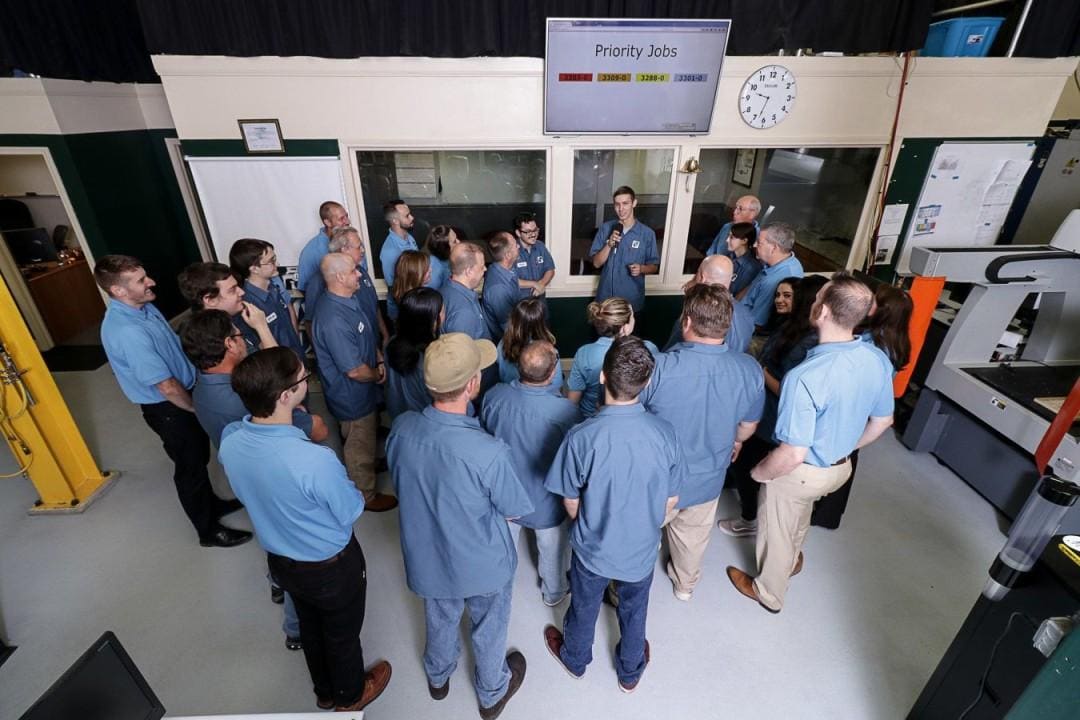
Promoting your best operator rewards floor skill, which has little to do with what running a crew actually demands. Here's how to tell when an internal promotion is the right call and when it's time to hire from outside.
A great machinist who can dial in a Haas cell blindfolded tells you almost nothing about whether he can run a shift. The strongest hands get tapped for the lead role the minute a supervisor walks out the door, and the reasoning feels airtight. They earned it, they know the work cold, and promoting from the floor keeps all that hard-won knowledge inside the building.
So you hand over the title, bump the pay, and pass along the schedule. Sometimes it works, other times, you watch your best welder turn into a frustrated supervisor, your scrap rate creep up, and a strong worker starts eyeing the door, all because the promotion fixed one problem and quietly opened three more.
Deciding when to promote from the floor and when to hire from outside is one of the toughest calls you’ll make as an owner or plant manager. This post walks through what the lead role actually asks of a person, when an internal promotion is the right move, and the signals that tell you it’s time to look beyond your own crew.
Why the Best Welder Doesn’t Automatically Become the Best Lead
The promote-by-default reflex runs deep in metals and machining, and it comes from a good place. After all, you’re rewarding craft, loyalty, and years of proven work, and keeping institutional knowledge where you can use it.
In fact, CEB Global research found that 60% of new managers fail within their first 24 months on the job, usually because the promotion decision was made on tenure and technical skill, the two things that have the least to do with running a crew.
Floor mastery and floor leadership pull from different toolboxes. Setting up a Mazak to a tight tolerance is individual execution: your focus, your hands, your reading on the metal. Running a crew is scheduling, coaching, defusing the argument at the weld booth, and answering for output that six other people produce.
Being the best operator can quietly work against a new lead. The person who used to solve every problem themselves now has to teach the team to solve it, and watching someone do it slower is its own special kind of torture for a guy wired to just grab the part and fix it.
What Running the Floor Actually Demands
The lead role looks like a straight promotion from the outside. Day to day, it’s a different job with a different scorecard, and a lot of it has nothing to do with how fast someone can cut a part.
The work shifts from parts to people. A lead spends the day juggling coverage, training the next operator, chasing a lapsed AWS D1.1 cert, and dealing with the guy who’s been late three Mondays running. None of that lands on a production counter, yet all of it decides whether the shift hits its numbers.
Moving from peer to boss is the hard reset nobody preps you for. You’re now running the same crew you grabbed lunch with last week, and the friendly ribbing turns into “why does my schedule look like this.” Learning to read the room and hold the line at the same time is a real skill, and it’s one nobody builds standing at a machine.
Plenty of plants treat this as sink-or-swim, and the floor can feel it. DDI’s most recent leadership research found that just 25% of manufacturing leaders rate their frontline leadership quality as high, putting the industry dead last among the major sectors. That figure shows how rarely shops develop floor leaders on purpose, and it’s the strongest argument for treating this as a deliberate decision rather than a reflex.
When to Promote From the Floor, and When to Hire
There’s no universal right answer here, only the right answer for the role, the crew, and the runway you’ve got in front of you. A handful of signals point pretty clearly in each direction.
Promote from the floor when:
They already lead without the title. The operator other guys walk over to with a setup question or a Fanuc fault code is showing the instinct before anyone hands them authority. That natural pull is worth more than the fastest cycle time you’ve got.
You’ve got a ramp and a mentor in place. When a current lead can show them the ropes and you’ve got a few months before the role goes critical, a learning curve won’t sink a shift. People grow into leadership with reps and support, and you can give them both.
You’ll actually invest in their development. A real path means leadership training, some NIMS-style structure, and regular coaching. Promote them and back them, and most strong operators rise to it.
Hire from outside when:
The crew needs a reset. A culture or accountability problem on the floor is tough for a former peer to untangle from the inside, because the history follows them into the role. An outside lead can walk in clean and set a new standard a lot faster.
You need a skill that isn’t in the building. Standing up a second shift from scratch, rolling out a new ERP, or bringing lean systems online calls for experience your bench simply hasn’t lived yet. Bring that in rather than betting someone will grow into it overnight.
There’s nobody to develop them. Dropping a strong worker into a leadership vacuum, with no mentor and no runway, sets them up to struggle. You can end up losing a great machinist and gaining a shaky lead in the same move, which is the worst trade on the board.
Get that match right, and you keep a great worker while gaining a lead the crew actually respects. Fill these roles on purpose, with clear eyes about what the job takes, and you’ll run smoother floors year after year. You’ll also spend far less time cleaning up after a promotion that never quite fits.
Sitting on an open lead role and not sure whether to look in or look out? Cannonball Recruiting places skilled trades and floor leadership across Pennsylvania and the East Coast, so you have a strong bench whichever way you decide to go. Talk to us before you fill it on habit alone.
Frequently Asked Questions
Why doesn't being the best operator automatically make someone a good lead?
Floor mastery and floor leadership draw on different skills. Running a machine to spec is individual execution, while running a crew means scheduling, coaching, and handling conflict, skills that don't automatically come with technical excellence.
When does it make sense to promote from the floor instead of hiring externally?
When the person already shows leadership instinct without the title, there's a mentor and enough runway to develop them, and the company is prepared to actually invest in their development rather than just handing over a title.
When should a company hire an outside lead instead of promoting internally?
When the crew culture needs a reset that a former peer can't credibly deliver, when the role requires a skill nobody currently on the floor has, or when there's no one available to mentor an internal promotion through the transition.