
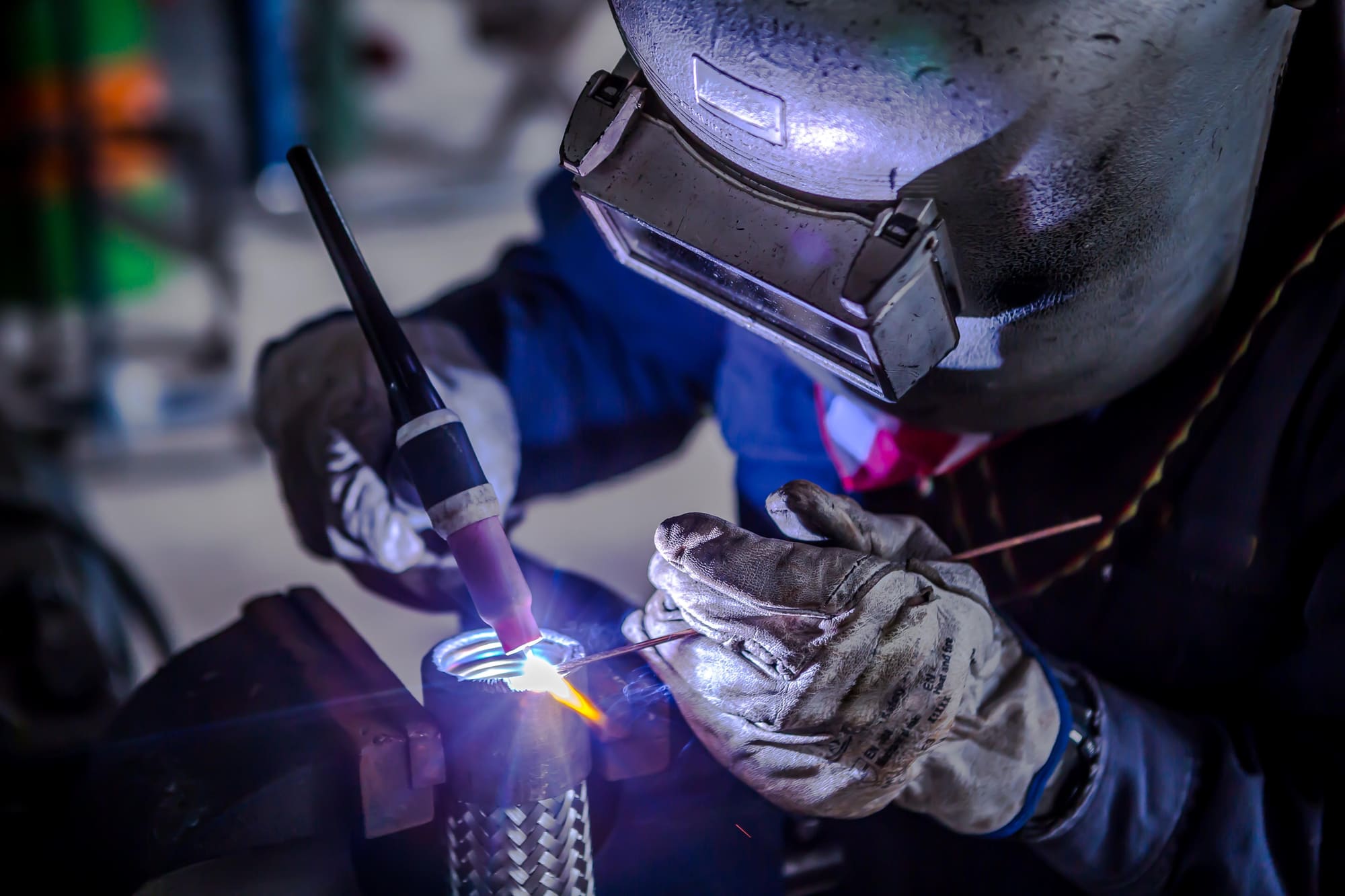
A vague job title like "Welder Wanted" treats every welding process as interchangeable, so unqualified applicants have no reason to rule themselves out before they apply. Here's what happens when you get specific instead.
How many welding processes does your “Welder Wanted” posting actually cover? If you haven’t specified one, the answer is probably all of them. Your job posting treats completely different skill sets as if they’re interchangeable. That’s what happens when you throw the same phrasing up on LinkedIn and wait for the “right” person to show up. A structural fitter-welder reads that headline. So does someone who’s only ever done spot welds on an assembly line. Both of them think they’re qualified. Neither of them is wrong, because you never told them otherwise.
Now you’re sitting on a pile of resumes that have almost nothing to do with the seat you’re trying to fill. iHire’s research found that close to 60% of employers say they’re already swamped with applicants who don’t match the job, and a one-line welder posting pours gas on that fire. Want fewer of those resumes clogging your inbox? Tell people exactly what the work is before they hit apply.
That pile of resumes is what happens when a posting never tells anyone what to rule themselves out of. We’ll get into what a vague headline actually screens for, what happens when you get specific instead, and how to write one that does a chunk of the screening before your team ever picks up the phone.
What a Generic Job Title Actually Filters For
A headline that says nothing specific asks nothing specific, so everybody throws their hat in.
It skips the question that matters. A title that broad never asks what kind of welding someone actually does, so a guy who runs flux-core on farm equipment looks just as qualified as someone who’s spent ten years on aerospace stainless. The posting did zero sorting, which means your team has to do all of it, one phone call at a time. Across a busy month, that’s a part-time job nobody asked for.
It pulls mismatches straight into your pipeline. An assembly-line spot welder applies for a structural fitter-welder opening. Somebody six months out of school applies for a seat that demands code qualification. They had no reason to bow out, so they didn’t, and now you’re the one writing the polite rejection email. Every shop in a busy industrial park deals with this, and it eats hours that should go toward placing the people who actually fit.
It’s increasingly AI-drafted, and that means generic by default. AI writes a growing share of job postings these days. 73% of recruiters already use it for the first draft, per the same iHire report. If you’re one of them, you’ll want to pay attention to this. The tool defaults to safe, generic language unless you feed it specifics, so the draft you get back reads like every other posting on the board until you go in and add the details yourself.
Sourcing is heading the same direction. More recruiting platforms are building their pitch around skipping the manual Boolean search entirely, letting an algorithm read a role and decide who counts as a match on its own. Whichever end you’re looking at, drafting or sourcing, swapping an exact filter for an automated guess gets you the same vague headline, “Welder Wanted,” with nobody left to spell out what the job actually needs.
Specificity Works Like a Filter
Here’s the same job, written two ways. Which one would make you want to apply?
Version one:
Welder Wanted Looking for an experienced welder to join our team. Must be reliable and able to work in a fast-paced environment. Competitive pay. Apply today.
Version two:
TIG Welder, Aerospace Components AWS D1.1 certified welder needed for TIG work on aerospace-grade stainless and aluminum components. Minimum 3 years on TIG, hand-fed, no robotic cell experience required. Lincoln Precision TIG 375 booths, climate-controlled shop. Code inspection on every part.
Same job, same shop, same pay. The first one gets a bunch of resumes and maybe six worth a callback, because nothing in it told anyone what to rule themselves out of. The second gets twelve resumes and nine worth a callback, because the posting already did the sorting before a human had to.
That’s the part most shop managers miss. Detail isn’t decoration on a job posting, it’s the mechanism that does your screening for you, and it doesn’t cost a dime extra to write. Every concrete fact you put in front of an applicant is one more reason for the wrong person to keep scrolling and the right one to stop.
1. Name the process itself
Swap “Welder Wanted” for “TIG Welder, Aerospace Components” and a welder can size up the job in about four seconds. A TIG specialist knows right away whether your structural stick-welding seat is worth a call. The structural hand knows just as fast whether your precision work is outside his wheelhouse. Either way, you’ve told a serious tradesperson you respect their time enough to say what the job actually is.
2. Lead with the code
Call out AWS D1.1, ASME Section IX, or API 1104 in the first few lines, and every applicant knows the work has to pass inspection. Anybody who’s only welded non-code parts rules himself out before he finishes the paragraph. That’s a call your team never has to make. Strong candidates read it the opposite way: it tells them you know what you’re hiring for, and that kind of credibility matters to people who have options.
3. Put a number on experience, not “preferred”
Cut the soft language and give a welder something to measure himself against: years on a named process, or a specific machine he should already know cold. A vague ask pulls in a vague resume. A number pulls in someone who’s already done the math on whether he qualifies.
4. Describe the equipment and the work
Lincoln or Miller, hand-welding booths or robotic cells, structural steel or precision aerospace parts, the specifics tell an experienced welder whether your shop matches what he’s used to. Someone who’s spent five years tending a robotic cell has no business applying to a manual fab shop, and naming the equipment lets him skip it on his own. Leave it out and you’ll both find out during the weld test, which wastes a perfectly good afternoon.
Detail also wins you the welders who get to be picky, and right now that’s nearly all of them. Give a skilled hand three open postings and he’ll pick the one that reads like the people who wrote it have actually been on a shop floor.
That said, a posting that names the process, the code, and the equipment does half your screening before a single resume hits the inbox. Leave those blanks empty and the applicant fills them in with whatever he wants to believe, which is hardly ever the answer your seat actually needs. If you want the right welders landing in your inbox, write a posting sharp enough to do the sorting itself, long before the phone rings.
Is your current welder posting pulling in the right people, or just more noise to dig through? At Cannonball, we work with shops that need code-qualified welders, fitter-welders, and machinists who can hit the floor and produce on day one. Talk to us before your next req goes live and we’ll handle the rest for you.
Frequently Asked Questions
Why does a generic "Welder Wanted" job title attract the wrong applicants?
A vague headline never asks what kind of welding someone actually does, so a spot welder and a structural fitter-welder both think they're qualified for the same posting. The listing did no filtering, so the shop's team has to do it all manually afterward.
What specific details should a welder job posting include?
The exact process (MIG, TIG, stick), the applicable code (AWS D1.1, ASME Section IX), a real number for required experience instead of "preferred," and the specific equipment and materials involved.
How much of a difference does posting specificity actually make?
A generic posting might generate twenty resumes with six worth a callback. A specific one built around the same role can generate twelve resumes with nine worth a callback, because the posting itself did the filtering before anyone had to pick up the phone.